Microscopy Images
Source: AJKD Atlas of Renal Pathology II (atlas series 2015–2025); original article published 2017. original article record.
This page preserves the historical source-atlas wording. It is an educational reference, not a diagnostic or treatment recommendation, and has not been independently medically reviewed. Interpret morphology together with clinical, laboratory, serologic, genetic, and other relevant data.
CKDu describes endemic chronic kidney disease without known etiology, most commonly occurring in developing countries. In Central America, the term Mesoamerican nephropathy (MeN) has been used.
MeN is slowly progressive and mostly affects male agricultural workers of Central America, with most patients between the ages of 20 and 60 years. In endemic regions in Central America, up to 20% of men have CKD, and most are without the traditional risk factors of diabetes, hypertension, or obesity.
Similar CKDu has been described in Sri Lanka, but these patients often have hypertension and some proteinuria. Patients with MeN usually present with various degrees of CKD, have normal blood pressure, are without hematuria, and have absent or sub–nephrotic-range proteinuria. Progression is slow but frequently results in end-stage kidney disease, and has resulted in more than 20,000 deaths in the region, which lacks adequate renal replacement therapies.
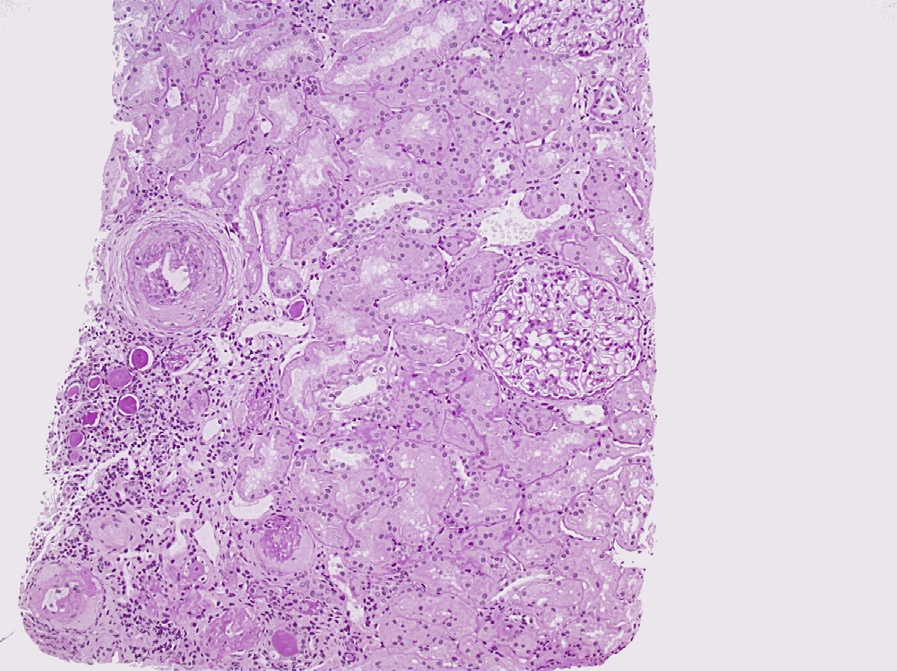
Light microscopy: There is variable global glomerulosclerosis with glomerular hypertrophy in remaining glomeruli, with morphologic changes of chronic glomerular ischemia with corrugated glomerular basement membranes and mild to moderate chronic tubulointerstitial injury with mostly mild vascular changes of mild arterial medial thickening.
Immunofluorescence microscopy: No immune deposits.
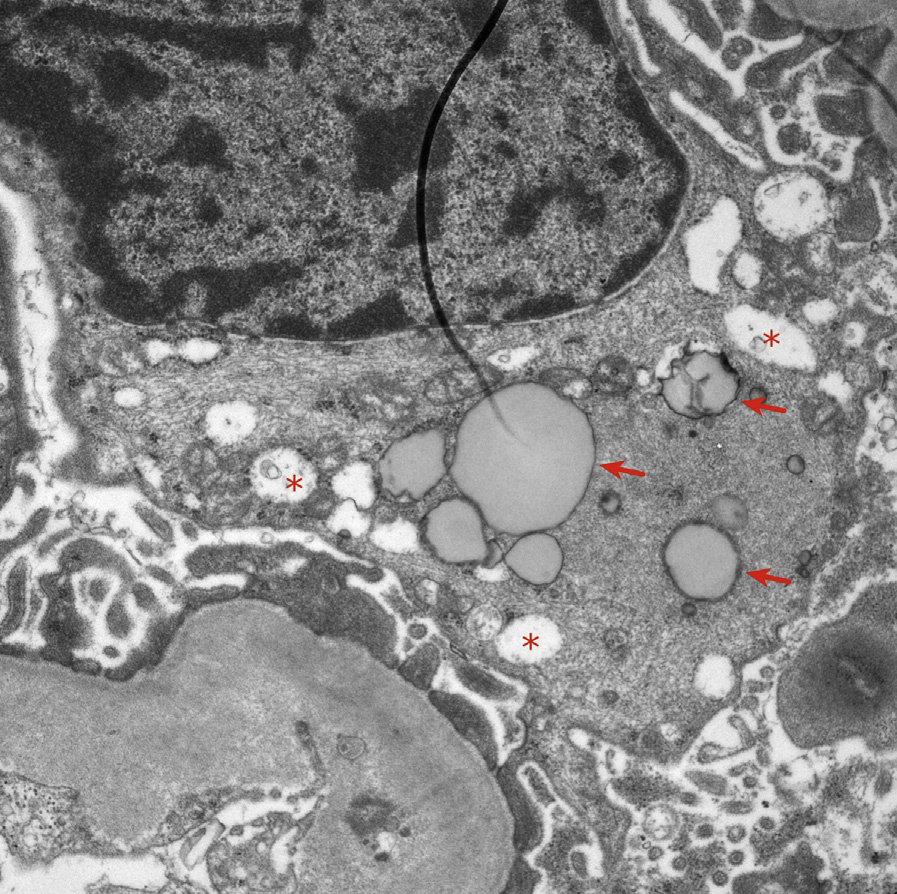
Electron microscopy: No immune deposits and limited foot process effacement.
The etiology of MeN is unknown but may be associated with heat and cyclic dehydration with volume depletion causing acute tubular injury. There is no specific evidence as of now to support a role of exposure to agrochemicals, pesticides, heavy metals, or endemic infections.
Similar chronic injury can be seen with arterionephrosclerosis; however, vascular changes are more prominent in arterionephrosclerosis.
Added context checked 2026-09-24; not part of the original atlas article and not a substitute for clinical judgment.