Microscopy Images
Source: AJKD Atlas of Renal Pathology II (atlas series 2015–2025); original article published 2015. original article record.
This page preserves the historical source-atlas wording. It is an educational reference, not a diagnostic or treatment recommendation, and has not been independently medically reviewed. Interpret morphology together with clinical, laboratory, serologic, genetic, and other relevant data.
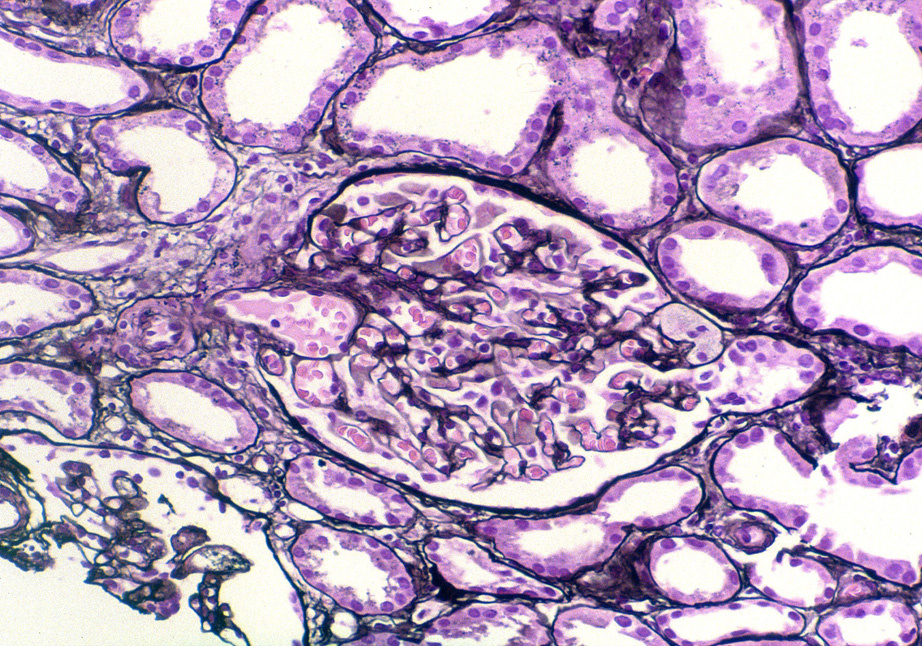
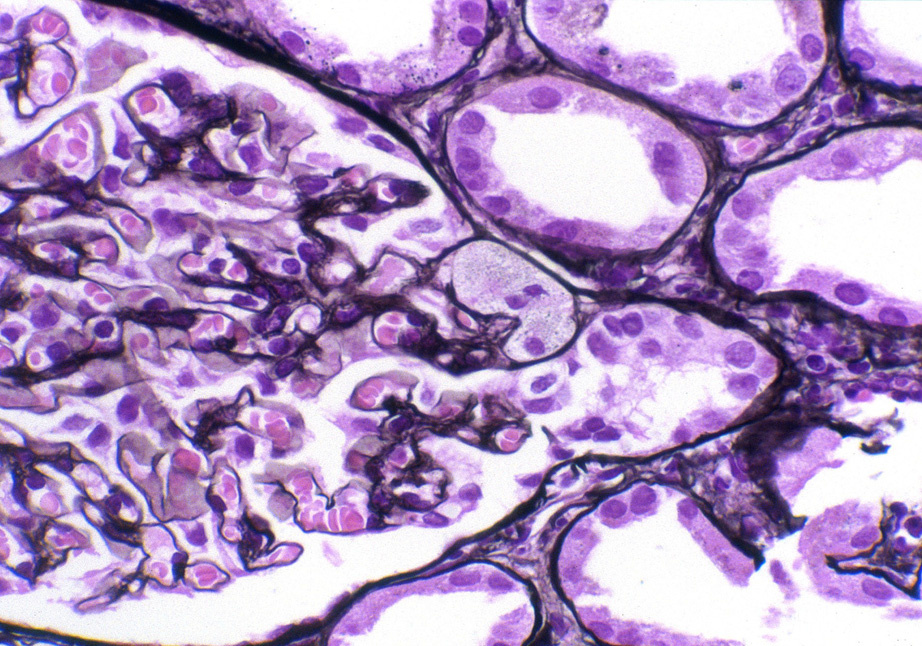
The tip lesion variant of focal segmental glomerulosclerosis (FSGS) is associated with nephrotic syndrome and usually responds to steroid therapy.
This FSGS variant has the lowest risk for progression to kidney failure.
Light microscopy: Segmental glomerulosclerosis or endocapillary hypercellularity (usually foam cells) involving <50% of the glomerular tuft at the tubular pole, with an adhesion or confluence with tubular epithelium to the tubular outlet. Collapsing and perihilar variants must be excluded.
Immunofluorescence microscopy: No or limited deposits (nonspecific immunoglobulin M and C3 staining in sclerotic areas).
Electron microscopy: Extensive foot process effacement. No or limited deposits.
The etiology and pathogenesis of tip lesion has not yet been defined. Injury to podocytes by turbulent flow at the tubular pole has been proposed.
Usually of primary etiology, but may be seen in other diseases with heavy proteinuria (eg, membranous nephropathy).
These links are current-reference entry points; the atlas text above preserves the source article wording. External links checked 2026-09-24.